• Home
  • About
  • AMERICA WILL BE BACK!
  • (The Life Advice Guide)
  • PHOTOS
  • Contact
  • Home
  • About
  • AMERICA WILL BE BACK!
  • (The Life Advice Guide)
  • PHOTOS
  • Contact

Justin M. Higgins

Interview Number Twenty Two With Alejandro Chaban

June 07, 2017  /  Justin Higgins

Photo:  Courtesy Alejandro Chabán

Photo:  Courtesy Alejandro Chabán

Justin Higgins: “Hi Alejandro, what life advice do you have for young adults?”

Alejandro Chabán: “Hi Justin. I encourage young people to visualize their dreams, and then turn them into specific goals. The power of the mind is magical: think about how as a child, you used your imagination to dream about what you wanted to be when you grew up. As an adult, identifying your aspirations and desires—and envisioning your success—is the first step in achieving your dreams.

Once you know what success looks like, it’s time to set your goals—a process that I outline in chapter six of my new book. Make sure your goals are clear, specific, and realistic. For example: if you want to run a marathon, but you haven’t started training, you probably shouldn’t sign up for a race that is only two weeks away. Set the marathon as your long-term goal, and work up to it with short- and medium-term goals, like starting a training program, running a 5K, a 10K and a half marathon. The same approach applies to any achievement you set your sights on, from buying your dream home to landing the job you’ve always wanted or to finally being able to fit into your favorite pair of jeans. Celebrate each goal that you reach in a way that is meaningful to you, and remember: one day at a time, one step at a time!”

. . .

Alejandro is an author, motivational speaker, certified nutrition and wellness consultant, founder and CEO of Yes You Can!, the first and only lifestyle with a Latin flavor. In his new book, “Think Skinny, Feel Fit: 7 Steps to Transform Your Emotional Weight and Have an Awesome Life” Alejandro shares his inspiring personal journey and his 7 essential steps to help people of all ages and backgrounds lose their physical and emotional weight and lead healthier, happier lives.

2 Likes
tags / alejandro chaban, weight loss, fitness, latin

Interview Number Twenty One With Don Peebles

May 14, 2017  /  Justin Higgins

Photo:  Courtesy Don Peebles / Credit:  Nicole Periera

Photo:  Courtesy Don Peebles / Credit:  Nicole Periera

Justin Higgins:  "Hi Don, what life advice do you have for young adults?"

Don Peebles:  "Hi Justin.  Dream big dreams.  To achieve any dream requires commitment, dedication and hard work.  Therefore, you might as well dream big.  However, the dreams must be realistically possible." 

. . .

Recognized as one of the most successful entrepreneurs in the nation, R. Donahue (Don) Peebles is Founder, Chairman, and CEO of multi-billion dollar company The Peebles Corporation, one of the country's few national privately held real estate investment and development companies with a portfolio of projects in New York, Washington, D.C., Philadelphia, Boston, Charlotte and Miami Beach.  Mr. Peebles also is a top-selling author of 'The Peebles Principles' and 'The Peebles Path to Real Estate Wealth'.  He is a regular guest on CNN, CNBC, and FOX, as well as a highly sought-after speaker.

Mr. Peebles is an avid supporter of mentoring to expose youth to the value of entrepreneurship.  He is the immediate past Chairman of the Board of the Congressional Black Caucus Foundation, is on the Board of Directors of the YMCA of Greater New York, is a member of Miami-Dade County Mayor Carlos A. Giménez’s Business Roundtable, was a two-time former member of President Barack Obama's National Finance Committee, and a former Chairman of the Greater Miami Convention and Visitors Bureau.

2 Likes
tags / Don Peebles, Real Estate, Real Estate Development, Entrepreneur

Interview Number Twenty With Ed Mitzen

April 22, 2017  /  Justin Higgins

Photo:  Courtesy Ed Mitzen

Photo:  Courtesy Ed Mitzen

Justin Higgins:  "Hi Ed, what life advice do you have for young adults?"

Ed Mitzen:  "Hi Justin.  The importance of making friends doesn’t stop when you leave college. Building friendships in the business world is so important to advancing your career, right along with work accomplishments and accolades.  It may sound cliché, but often business is a personality contest.  It’s human nature to want to work with people with whom you want to spend time.  So make sure that as you start your career, you meet as many people as you can, and take the time to get to know them.

In my career, I have been fortunate to meet so many wonderful people.  Many of them I have helped in their careers, and many have helped me.  It takes effort to get to know work colleagues, so put the effort in early on.  Build friendships.  Find ways to help others.  Be supportive and positive of everyone.  Along with feeling great by helping others, it will come back to you in many ways you can’t even imagine this early on in your career."

. . .

Appropriately referred to as the serial entrepreneur, Ed has successfully launched three entrepreneurial ventures exceeding $500 million in revenue.

Currently with his fourth company, Fingerpaint Marketing, which he Founded, Ed has created a uniquely successful agency.  Fingerpaint is a full-service marketing agency with 165 employees and nearly $30 million in annual revenue.  Recently named Industry Person of the Year by Med Ad News, Ed has led his company to the Inc. 5000 List of Fastest-Growing Companies for four consecutive years.  Ed has also driven the Fingerpaint team to several industry accolades including, 11 Addy Awards, 5 Hermes Creative Awards and a SmartCEO Brava Award among many others.  Before forming Fingerpaint, Ed founded Palio Communications, an advertising and communications agency in Saratoga Springs, NY.  During the rise of Palio, Ed's leadership and business acumen brought the agency from a local five-person shop to a twenty-five-million dollar annual company with nearly 175 employees.

Ed is a frequent lecturer on the topics of advertising and marketing at several top colleges and universities, including the University of Rochester and Skidmore College.  He is also an active member of the local community, serving on the board of directors of various not-for-profit organizations including The Hyde Collection, Saratoga Performing Arts Center (SPAC), Union Graduate College, Double H Ranch, and formerly the Saratoga Care Foundation and the Waldorf School of Saratoga Springs.

He resides in Saratoga Springs with his wife Lisa and his daughter Grace.  He also has a daughter Emily and a son Nick who is a student at the University of Colorado at Boulder.

To learn more about Fingerpaint Marketing, please visit:  www.fingerpaintmarketing.com  


2 Likes
tags / Fingerpaint, Marketing, Entrepreneur, Design, Ed Mitzen

INTERVIEW NUMBER NINETEEN WITH ALEXANDRA LEBENTHAL

March 28, 2017  /  Justin Higgins

TLAG.png
Photo:  Courtesy Alexandra Lebenthal

Photo:  Courtesy Alexandra Lebenthal

Justin Higgins:  "Hi Alexandra, what life advice do you have for young adults?"

Alexandra Lebenthal:  "Trust...your gut.  It can take time to learn to trust your gut.  Why should what you think inside be more important than facts or what other people say.  There is actually science behind it.  Trusting your instincts is part of rational decision making.  Having instinctual feelings around whether you should do business with someone can be as meaningful as the instinctual feeling that going down that dark alley doesn't seem like the right thing to do.  I will say that every time I have not listened to my instincts I have been wrong, wrong, wrong.  It's cost me a lot of pain and money too, so if I had to give one of the most important pieces of advice this is it."

. . .

Alexandra Lebenthal is the Co-CEO of Lebenthal Holdings and CEO of the company's wealth management business and broker dealer. She comes from a storied Wall Street family.  Her grandparents, Louis and Sayra Lebenthal, founded Lebenthal & Co., a municipal bond specialist, in 1925.  Her grandmother worked until age 93.  She followed her father, James Lebenthal, as the company spokesperson.  She joined Lebenthal in 1988 and became President and CEO in 1995 at the age of 31.  Ms. Lebenthal remained at the firm for four years after its sale, leaving in 2005 before starting anew in 2006. 

A passionate supporter of women in business, she was named one of the top 50 Women in Wealth Management by Wealth Manager Magazine.  She has also been named to the Crain's New York Top Women Owned Business and the Crain's Fastest 50 Growing Businesses in New York.

As one of the most recognizable women on Wall Street she is a frequent commentator in the media, and is an official CNBC contributor.

She is a board member of The Committee of 200, the leading organization for female businesswomen.  She is also a board member of Savvy Ladies, a non-profit organization that provides financial literacy education and resources for women. 

Ms. Lebenthal is involved in many cultural and philanthropic institutions in New York City.

Ms. Lebenthal published her first novel "Recessionistas," in August 2010, which was sold to USA Networks.  She will be publishing "The Women's Investment Bible," in 2016, a comprehensive book on investing for women.  

She is also the Co-founder of "The Women's Executive Circle," a group of high-profile Jewish Women that mentor other women under the auspices of United Jewish Appeal.

A graduate of Princeton University in 1986, with an A.B. in history, Ms. Lebenthal began her career in the municipal bond department at Kidder Peabody Inc.

Ms. Lebenthal lives in New York City with her husband, Jay Diamond.  They have three children, Benjamin, Charlotte and Eleanor.

Follow Alexandra Lebenthal on Twitter @alebenthal.

1 Likes

Interview number eighteen with Robert Wolf and Brandon Torres Declet.

January 23, 2017  /  Justin Higgins

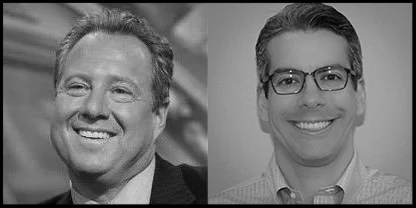
Photos:  Courtesy Robert Wolf and Brandon Torres Declet

Photos:  Courtesy Robert Wolf and Brandon Torres Declet

Justin Higgins: "Measure, the Drone as a Service Company, launched in 2014 as a subsidiary of 32 Advisors.  Robert, firstly, what is 32 Advisors?"

Robert Wolf:  "After nearly three decades on Wall Street, I decided I wanted to build a small, focused advisory firm that draws from my past experiences and connects them to current trends.  Hence came 32 Advisors which is a boutique firm offering macroeconomic and geopolitical insights led by former Chair of The Council of Economic Advisors - Austan Goolsbee - and our cutting-edge infrastructure advisory services led by well-known expert Michael Likosky.  I also wanted to have the freedom to do venture capital and private investments in sectors that I thought would do well in the future, so I created a vehicle called 32 Entertainment. Through this platform, I have already done over a dozen investments in areas such as app gaming, drone technology, cyber security, concussion research, virtual shopping and numerous other start-ups.  (Little secret, 32 was my college football number and it has always been a good luck number and Wall Street traders are superstitious by nature so thus the name of my companies).

Much of my thinking came from spending quality time around incredibly smart and successful thought leaders from both the public and private sector.  I have had the good fortune of meeting many of them over the past decade during my time serving on three Presidential Councils:  the Economic Recovery Advisory Board, the Council for Jobs and Competitiveness and the Export Council.  These appointments gave me a newfound appreciation for the incredible opportunities at the intersection of K Street, Main Street and Wall Street and our drone company Measure is the perfect example."

JH:  "As a follow-up, Brandon, how did Measure become a part of 32 Advisors?"

Brandon Torres Declet: "During my tenure in senior positions on Capitol Hill and the Department of Defense, I gained an appreciation for the versatility of drone technology and the game-changing promise that it held for the commercial sector if deployed with the proper business model.  Taking a cue from the success of Software as a Service, B2B companies in the second wave of internet-enabled technology such as Salesforce and NetSuite, I realized that to maximize ROI for commercial end users of this sophisticated technology, a Drone as a Service® model would be needed.  Thus, the idea for Measure’s full-stack service offering was born.

I came to Robert with the idea for Measure back in 2014 after being introduced through a mutual colleague.  I pitched Robert on the idea hoping that he would be interested enough to at least take another meeting. Robert, never one to pass up a good investment opportunity, loved it.  He became a co-founder and 32 Advisors served as an incubator of sorts while we honed our business model.

Surrounded by the private and public sector expertise of the 32 Advisors team, Measure molded itself into a truly professional, scalable services provider in a remarkably short period of time.

A little over a year later in September 2015, we spun out from 32 Advisors at the closing of our Series A financing round, and began operating as an autonomous entity."

JH:  "Being an entrepreneur is about breaking barriers.

With Brandon answering first, could you each describe how you are breaking barriers as entrepreneurs with Measure?"

BTD:  "I’d say Measure broke barriers early on by betting on the drone industry being a services play when most everyone else was focused on building another quadcopter.  But I think in the next year, we’ll see that Robert and I made a smart bet – everything is shifting to services.  Just as companies value the turnkey service Salesforce provides because they avoid the high costs and complexity of building their own CRM systems, without a group like Measure to manage and operate drones, enterprises will face challenges extracting the real value that comes from leveraging drone technology. In our case, this is consistently high-quality, actionable data products.

Beyond taking SAAS models for inspiration, Measure has adopted another business model, this one common to restaurants and hotels, as a quick and cost efficient model to scale drone services — franchising.  This model breaks down the barriers to rapid scaling in a hardware-intensive industry by building our business through a network of trusted franchisees set up across the nation rather than solely from a central hub."

RW:  "I’ll elaborate on Measure’s Drone As A Service® concept.  As Brandon mentioned, we believe the future of the industry is not in hardware or speculating on drones as a commodity, but in being able to provide commercial end users with a turnkey solution to using drones.  Measure acts as a risk mitigation service and takes the stress out of working with drones so companies can simply sit back and reap the benefits of productivity and efficiency gains, as well as enhance their imagery output and/or analytical needs.  As we say at Measure – "we don’t make drones, we make drones work".

Measure utilizes best-in-class technology to outfit our fleet of drones and highly trained pilots to perform operations.  Every flight we do is safe, legal, and insured. When flights are completed, our data engineers run quality checks on the raw data and deliver actionable intelligence products.  In the complex world of drones, having the right analysis and thoughtful, relevant recommendations is key to add value to our customers’ businesses.

I admit this sounds a little bit like an infomercial for Measure.  And in a way, that’s because it is:  we are operating a socially impactful business with a unique value that meets the challenges associated with using this disruptive technology and collecting big data in a regulated environment.  It’s a considerable barrier to break down, but has potential to yield significant dividends to our customers and to society as a whole."

JH:  "I see you recently closed $15 million in funding for Measure's series B.  Could you tell us a little bit about your experience raising money and any tips for young entrepreneurs as they look to find their strategic investors?"

RW:  "The raise was quite a fascinating process; Brandon and I improved our pitch each and every day.  We started to get real momentum when investors began to realize how big an opportunity we were chasing; Price Waterhouse Coopers pegged it at $125B.  As we did our road show, Measure hit its 1000th flight, then prospective investors and clients realized how fast we were growing and wanted to partner with us."

BTD:  "Investors not only saw our speed of growth, they also came to realize that we sat in a unique position with our platform-agnostic approach toward technology and services-focused business model.  So I’d say it’s important to create your niche and truly understand the distinct value your company brings; justify this with data; and effectively communicate this to investors in a compelling format.

Second, focus on finding the right investment partner. Not all money is smart money.  Each one of our investors is strategic; some accentuate our business development efforts while others aid us with their facility in technology integration.  For example, we were fortunate early on to cultivate a business relationship with Cognizant. When we started the raise and met with their venture group, it became apparent that Cognizant’s unparalleled information technology expertise could help our customers maximize the value they receive from our data products.  So in addition to Cognizant’s monetary investment, the company brings a lot to the table with their knowledge, experience, and trusted brand that will help Measure consistently innovate and improve upon our data services."

JH:  "Prior to Co-Founding Measure, you both previously had successful careers working for established organizations, Robert on Wall Street and Brandon in consulting and legal roles.

With Robert answering first, what drove each of you to move out of your comfort zones and become entrepreneurs?"

RW:  "After being at only large, global financial services firms with best-in-class resources to leverage, I now have the utmost admiration for entrepreneurs and start-ups.  Launching a new business has been an incredibly different experience than anything I have ever done. People ask me what’s it like after running a firm of tens of thousands of people in over 25 countries, and I tell them it is humbling, hard, liberating and exciting all in the same day.

I always believed that to be successful one needs to take prudent risks and have ambitious stretch goals.  And as a person who has always walked that fine line of confidence and arrogance, pursuing new challenges is always something I wanted to tackle head on.

The pace of technological change is exponential, and I’ve turned part of my focus to technology and big data. I believe it’s supremely important for any business person to keep abreast of these developments, especially because technology drives some of the world’s most powerful and profitable firms.  As a capitalist at heart, I had to put myself in the mix – as we say, it was time to teach this old dog some new tricks. So, looking to the future, this overlay of technology and big data remained a priority to me and led me to invest in a new business:  unmanned aerial vehicles."

BTD:  "Moving out of one’s comfort zone is about one thing:  taking risks specifically for something that you believe in.  Hindsight is 20/20, but if you don’t move quickly to seize opportunities they will pass you by and you will always be left wondering “what if?”  Missing out on something that inspires me scares me far more than failure.

With Measure, I saw an opportunity in a new industry that no one was addressing.  Collecting high-quality data with drones requires a level of skill, expertise, safety mitigation infrastructure, and organizational complexity that not all large companies want to invest in.  Measure’s Drone as a Service® model offers the perfect, packaged solution to these challenges."

JH:  "You both have a wealth of life experiences.

Accordingly, with Brandon answering first, what life advice do you each have for young adults?"

BTD:  "Be bold, take risks, and never be complacent. Your future will be much more exciting and fulfilling if you do."

RW:  "I would tell young people: always do your homework, be prepared, be dynamic and keep your eyes and ears open to the future – you never know where it will take you."

. . .

Robert Wolf is Chairman and co-founder of Measure, a company offering Drone as a Service® and Founder and Chief Executive Officer of 32 Advisors, a company focusing on economic advisory services and developing infrastructure projects.

Prior to forming 32 Advisors, Robert spent 18 years at UBS, a global financial services firm. There he held several senior positions including Chairman and CEO of UBS Americas and President and Chief Operating Officer of the Investment Bank. He joined UBS in 1994 after spending approximately 10 years at Salomon Brothers.

In addition to his role at 32 Advisors, Robert has held three Presidential appointments under President Obama; as a member of the Economic Recovery Advisory Board from 2009-11, the Council on Jobs and Competitiveness from 2011-13 and the Export Council from 2014-16. In 2012 Robert was on the Homeland Security Advisory Council's Border Infrastructure Task Force.

Robert serves on the Board of Directors of the Barack Obama Foundation, Undergraduate Executive Board of the Wharton School, on the Athletics Board of Overseers at the University of Pennsylvania and as Vice Chairman of the Robert F. Kennedy Center for Justice & Human Rights. Robert also sits on the board of the Partnership for NYC, the Leadership Council for the Multiple Myeloma Research Foundation and is a member of the Council on Foreign Relations, and a graduate member of the Committee Encouraging Corporate Philanthropy. From 2002 to 2013, Robert was on the board of trustees of the Children's Aid Society and on the Board of Directors of the Financial Services Roundtable from 2007 to 2010. Robert was named to Worth Magazine's 100 Most Powerful People in Finance in 2013 and in 2012-13, he hosted the show "Impact Players" on the Reuters Channel on YouTube TV. In December 2016, Robert joined Fox News/Fox Business as a TV contributor and as a member of the Advisory Board of Fox’s show Wall Street Week.

Robert is a graduate of the Wharton School at the University of Pennsylvania, receiving a B.S. in Economics. While at UPenn, he played on the varsity football team that won IVY League Championships in both the 1982 and 1983 seasons and was an honoree into the Ivy Football Association in 2013. In May 2014, Robert received the Distinguished Alumni Award from the Wharton School. Robert currently resides in Purchase NY and grew up in Marblehead, MA and is in the town's Athletics Hall of Fame. Follow on twitter @robertwolf32.

. . .

Brandon Torres Declet is the CEO and Co-Founder of Measure. Prior to founding Measure, he established and managed the Defense and Homeland Security government relations practice at McAllister & Quinn, served as Counsel on Capitol Hill to Senator Dianne Feinstein and Congresswoman Jane Harman, advised the NYPD Counter Terrorism Bureau under Commissioner Ray Kelly and held senior positions at the Departments of Defense and Homeland Security. Brandon also served on the UAS Registration Task Force Aviation Rulemaking Committee in November 2015.

3 Likes

Interview number seventeen with Elliot S. Weissbluth.

January 17, 2017  /  Justin Higgins

Photo:  Courtesy Elliot S. Weissbluth

Photo:  Courtesy Elliot S. Weissbluth

Justin Higgins:  "Hi Elliot, what life advice do you have for young adults?"

Elliot S. Weissbluth:  "Hi Justin.  

Managing money is one of the more intimidating and confusing adult responsibilities in today’s world—but it shouldn’t have to be. Here are the three pieces of advice I frequently give to young people:

1.  Save More Tomorrow

No matter what your income is, get into the habit early of only spending most, not all, of that amount. For example, commit to saving 3% of your income this year, but commit to increasing that amount as you make more money. When you’re living off of less than you actually make, you won’t struggle to put away money out of each paycheck, and if you can increase that over time, you will benefit from compound savings.

2.  Get a Trustworthy Advisor Who’s a Fiduciary

As your financial needs get more complex, find an advisor who can help you with a plan. Find someone who understands tax and estate planning, and who can talk to you about your life and goals—rather than someone who is trying to sell you an investment product where he gets paid a commission. Even though you may not yet own a home, or have children in college, or be thinking about retirement, if you start with a plan now, you will be more prepared in life for those types of events.

A fiduciary is ethically and legally obligated to serve your best interests ahead of their own personal or professional gain—like a doctor or a lawyer (watch this video for more details). To find out if an advisor is a fiduciary, ask them “is the fee I pay you for your advice the only way you or your firm is making money off me?” If the answer is anything but an unequivocal “yes,” that advisor might be incentivized to sell you products to take money out of your pocket and put it into theirs. And that means you should walk away.

3.  Avoid Fees

The typical mutual fund includes at least a dozen fees, plus some additional costs that may not be obvious. Wall Street is designed to enrich the people working at the big firms and the people who are selling and running the funds. Educate yourself on how much your investments are costing you, and work with your advisor to make sure you’re not getting screwed.

Saving and investing is a lifelong responsibility. The sooner you get started on the right foot, the easier you make it for yourself."

. . .

Elliot S. Weissbluth is Founder and Chief Executive Officer of HighTower. Mr. Weissbluth’s commitment to disrupting the industry in favor of transparency and integrity has driven HighTower’s growth since he founded the company in 2007 in the midst of the financial crisis. The business model he pioneered combines the fiduciary standard for financial advisors with an open-source platform where providers of the industry’s top products and solutions compete for HighTower clients’ business. Mr. Weissbluth and HighTower continue to challenge the status quo by bringing transformative ideas and transparent solutions to financial services.

In 2014, 2015 and 2016, Worth named Mr. Weissbluth to its annual Power 100 list. He has also been named to Investment Advisor’s list of Top 25 Most Influential People in the Industry in 2012 and 2013, was ranked second on RIAbiz’s 2012 list of Most Influential Figures in the RIA Business, and was included on InvestmentNews’ 2012 Power 20 list. Mr. Weissbluth is a LinkedIn Influencer—a member of a prestigious, invitation-only group of thought leaders who share insights with the LinkedIn community on a regular basis.

Prior to founding HighTower, Mr. Weissbluth was President of U.S. Fiduciary, a boutique broker-dealer. Previously, he was Director of Marketing & Research at RogersCasey, one of the nation’s leading investment research and institutional Registered Investment Advisory firms before it was purchased by Capital Resource Advisors in 2002.

Mr. Weissbluth earned his Juris Doctorate from the John Marshall Law School and his Bachelor of Arts degree in English from Rice University. He sits on the board of Endeavor Global, a global nonprofit that transforms emerging countries by supporting high-impact entrepreneurs.

Mr. Weissbluth is a frequent guest on major broadcast networks, including CNBC, Fox Business and Bloomberg.

2 Likes
tags / Elliot Weissbluth, Hightower Advisors, Investing, Finance, Fiduciary

Interview number sixteen with Gregory J. Fleming.

December 20, 2016  /  Justin Higgins

Justin Higgins:  "Hi Gregory, what life advice do you have for young adults?"

Gregory J. Fleming:  "Hi Justin.  I am raising three millennials, Andrea, who is 20 and a Junior at Yale College, Charlotte, who is 18, a Senior in high school and on her way next fall to Colgate University, and my son Rory, a Junior in high school.  So this topic around life advice for young adults is very germane for me and something I spend a lot of time reflecting on.  My children often tease me on my constant stream of advice, always three themes, which is my self-imposed limit on digestible content for human beings in one setting.  In this case, given the gravity of the topic and the many things I would like to say, I have four thoughts to communicate to young adults.

Work hard, stay humble, think big, and maintain balance and a focus on what is truly important in the long run.  These are the building blocks for a successful and happy life.  Human beings need to be challenged and stimulated by hard work.  Humility is critical for you to interact constructively with others and also because it will come in handy in life when you, as we all do, get kicked in the teeth.  If you won't think big and stretch for the most you are capable of, nobody will do that for you.  Last, all is lost, and you will inevitably and tragically end up unhappy later in life if you lose perspective and balance and fail to stay faithful to those things that matter most to you."

. . .

Gregory J. Fleming is a Senior Research Scholar in Law; Distinguished Visiting Fellow, Center for the Study of Corporate Law; and Visiting Lecturer in Law at Yale Law School.  He is the former President of Morgan Stanley Wealth Management and Morgan Stanley Investment Management.

Mr. Fleming is a leading authority in the global financial services industry.  He joined Morgan Stanley in February 2010 as President of Morgan Stanley Investment Management, a role he held until October 2015.  He assumed the additional role leading Wealth Management in January 2011.  Prior to joining the Firm, Mr. Fleming served as President and Chief Operating Officer of Merrill Lynch from June of 2007 to early 2009.  Previously Mr. Fleming ran Merrill Lynch’s Global Investment Banking business and joined Merrill Lynch as an investment banker in 1992.  He also has been a principal at Booz Allen Hamilton.  After leaving Merrill Lynch in January of 2009 after 17 years, Mr. Fleming was a Senior Research Scholar and Distinguished Visiting Fellow of the Center for the Study of Corporate Law at Yale Law School. 

Mr. Fleming is a director of Colgate University, a member of the Board of Advisors for the Yale Law School Center for the Study of Corporate Law, the Council on Foreign Relations, the Economic Club of New York, a Director on Turn 2 Foundation Board, a Trustee at Deerfield Academy and a member of the Ronald McDonald House Board of Directors.  He is a Phi Beta Kappa, summa cum laude graduate in economics from Colgate University and received his J.D. from Yale Law School.

3 Likes
tags / Gregory Fleming, Yale, Yale Law School, Wall Street

Interview number fifteen with Dr. Gad Saad.

December 18, 2016  /  Justin Higgins

Justin Higgins:  "Hi Dr. Saad, what life advice do you have for young adults?"

Dr. Gad Saad:  "Hi Justin.  Firstly, pursue a career that you are passionate about.  Life is short and every moment is precious. It is an immeasurable tragedy to spend a sizeable portion of one’s waking hours doing a job that does not excite you nor infuse you with a sense of purpose.  

Secondly, commit yourself to lifelong learning.  I have been a professor for twenty-two years and yet I learn new things on a daily basis. If anything, I am immensely passionate about my profession in part because it allows me to traverse countless intellectual landscapes.  My personal growth stems from the humility with which I navigate the world, namely with a reverence for all of the knowledge that I’ve yet to learn but that is out there available to me.

Thirdly, never cower to group conformity, political correctness, and other forms of thought policing.  I am willing to bet that all of the contributors to this series share one reality in common:  Their success in their respective areas of expertise was partly shaped by the courage of their convictions.  Memorable people do memorable things. Followers are seldom remembered. The herd mentality is the killer of innovation. When appropriate, be bold in your undertakings.

Finally, live your life honestly and with dignity. Pursue the truth and in doing so shed any hints of a tribal and ideological mindset.  Don’t be a member of the blue team or the red team; instead belong to Team Truth, of which its members are guided by science and reason alone. Now go forth and live life to its fullest!"

. . .

Dr. Gad Saad is Professor of Marketing at Concordia University (Montreal, Canada), and the holder of the Concordia University Research Chair in Evolutionary Behavioral Sciences and Darwinian Consumption. He has held Visiting Associate Professorships at Cornell University, Dartmouth College, and the University of California–Irvine. Dr. Saad received the Faculty of Commerce’s Distinguished Teaching Award in June 2000, and was listed as one of the ‘hot’ professors of Concordia University in both the 2001 and 2002 Maclean’s reports on Canadian universities. Saad was appointed Newsmaker of the Week of Concordia University in five consecutive years (2011-2015), and is the co-recipient of the President’s Media Outreach Award-Research Communicator of the Year (International), which goes to the professor at Concordia University whose research receives the greatest amount of global media coverage.

Professor Saad has pioneered the use of evolutionary psychology in marketing and consumer behavior. His works include The Consuming Instinct: What Juicy Burgers, Ferraris, Pornography, and Gift Giving Reveal About Human Nature (translated into Korean and Turkish); The Evolutionary Bases of Consumption; Evolutionary Psychology in the Business Sciences, along with 75+ scientific papers, many at the intersection of evolutionary psychology and a broad range of disciplines including consumer behavior, marketing, advertising, psychology, medicine, and economics.  His Psychology Today blog (Homo Consumericus) and YouTube channel (THE SAAD TRUTH) have garnered over 4.1 million and 4.2 million total views respectively.  In addition to his scientific work, Dr. Saad often writes and speaks about topics as varied as postmodernism, radical feminism, cultural and moral relativism, political correctness, the thought police, and Islam.

He received a B.Sc. (1988) and an M.B.A. (1990) both from McGill University, and his M.S. (1993) and Ph.D. (1994) from Cornell University.

6 Likes
tags / Gad Saad; Marketing; Professor; Concordia University

Interview number fourteen with Tom Zgainer.

December 11, 2016  /  Justin Higgins

Photo:  Courtesy Tom Zgainer

Photo:  Courtesy Tom Zgainer

Justin Higgins:  "Hi Tom, what life advice do you have for young adults?"

Tom Zgainer:  "Hi Justin.  My life advice for young adults is based on the importance of saving and understanding your  money.

We've all heard the phrase "save for a rainy day."  Maybe that's why we are not so great at saving - the phrase is attached to a day that might not be so fun!  We should expect all kinds of days ahead, plenty of them sunny, and the financial resources we accumulate along the way will allow us to build security and enjoy what may be in store for us 20 - 30 years after we retire. Starting to save early, even in small and incremental amounts, makes all the difference over time due to the magic of compounding.  Albert Einstein, among the most notable thinkers in history, agreed.  He said, "Compound interest is the 8th wonder of the world.  He who understands it, earns it...he who does not, pays it!"  So have fun today, by all means, but find a way to pay yourself every pay period into a "security bucket" you just will not touch.

And that security bucket needs your attention!  Because if your money is invested, you have to know exactly what your investments are costing you.  Stunningly more than 60% of 401(k) participants believe that they are paying no investment-related fees.  Nothing can be further from the truth.  There are fees, and you are paying them in your 401(k) or IRA.  It is just a matter of to what degree.  So take an interest in finding out your exact costs.  Why?  Over your investing life, a 1% difference in fees can shave off 10 years of savings for retirement.  Don't let that happen - it's your money!  If you participate in an employer-sponsored retirement plan, don't be shy about asking your employer if they have selected the best plan possible.  Help them by comparing the fees in your plan to alternatives.  You never know, the interest you take in your own future might help lead to a far better outlook financially for those you love and work with."

. . .

Tom is the CEO & Founder of America's Best 401k.  America's Best 401k, of which world-renowned peak performance strategist Tony Robbins is a Partner, is one of the most disruptive solutions in the retirement planning space.  America's Best 401k remembers what most plan providers have seemingly forgotten:  that the money in 401(k), 403(b) and defined benefit plans is the possession of real people - people with families - who deserve to experience the benefits of the money they have had the discipline to sock away.  America's Best 401k offers plan sponsors and participants freedom from expensive 401k plans and underperforming investment options.  For more information, visit:  americasbest401k.com.

3 Likes
tags / Tom Zgainer, America's Best 401k, 401k, Retirement, Saving

Interview number thirteen with Jordan Zimmerman.

October 14, 2016  /  Justin Higgins

Photo:  Courtesy Jordan Zimmerman

Photo:  Courtesy Jordan Zimmerman

Justin Higgins:  "Hi Jordan, what life advice do you have for young adults?"

Jordan Zimmerman:  "Hi Justin.  My life advice for young adults is as follows:

First, find your passion in life and make a fulfilling career out of it.  Find that passion like you find your passion for sports or for education and then apply your educational platform around that passion to become more focused on the end result, which is having a career you look forward to pursuing every day.  Work should not feel like work.  Work should feel like a sport or just plain old fun.

Second, don't chase the paychecks.  Chase the passion! One day, the money will come."

. . .

Jordan Zimmerman is Founder, Chairman and architect of the Zimmerman Advertising empire, now the 14th largest advertising agency in the world with published billings in excess of $3 billion.

Jordan Zimmerman founded his company in 1984 working tirelessly, personifying an insane commitment to be the best.  Jordan trademarked his own term, “Brandtailing®”- a maverick combination of long-term brand building and short-term sales boosting that delivers measurable results.  This methodology became well known throughout the advertising industry and is the hallmark of Jordan Zimmerman’s success.

Jordan Zimmerman is known as “Advertising’s Bad Boy” and his list of winning clients is a “who’s who” of the retail world.  His is the firm that is behind such great brands as ADT, Atlantis, AutoNation, Ashley Furniture, Boston Market, Carfax, CBS, Chico’s, Chuck E. Cheese, Consolidated Credit, Dish Network, Dunkin’ Donuts, Extended Stay America, Firehouse Subs, five Below, The Florida Panthers, The Fresh Market, hhgregg, Jamba Juice, Kanes, Lane Bryant, La-Z-Boy, Lennar, Logan’s Roadhouse, Lucky Brand, Michaels, Office Depot, Papa John’s, Party City, Pep Boys, Nissan, Saks Fifth Avenue, Soma, Tire Kingdom, Toys”R”Us, White Castle, White House Black Market, Modell’s, Advance America and many more. The list is long and impressive, and ever growing.

Jordan is highly respected within the advertising world and often asked to address industry groups and participate in panel discussions across the country.  In May 2013, Jordan delivered the Mirren New Business Conference keynote speech, opening the two-day marketing and advertising industry meeting in New York City.  February of 2015 saw Jordan as a keynote speaker for the Cleveland Clinic Florida Leading in Healthcare conference.  He, along with Jack Welch, former Chairman and CEO of GE, shared their styles on company growth and leadership in today’s fast paced, social and digital environment.

April of 2015 brought perhaps the most prestigious honor that any American could ever dream of being awarded. Jordan Zimmerman was one of twelve individuals inducted into the Horatio Alger Association of Distinguished Americans.  The tremendous honor is bestowed upon individuals who triumphed over adversity in their lives and achieved success despite obstacles that they overcame.

Jordan has been featured numerous times in South Florida CEO Magazine, where he continues to make the list of the “One Hundred Most Powerful People in South Florida.”  The first man to grace the cover of Simply the Best magazine in June 2016, Jordan shares his perspective from the top.  Two years prior, he was featured as the October 2014 cover story for South Florida Business and Wealth magazine.  He received the 2013 FAU Business Leader of the Year Award and had the distinguished honor of being named the Ernst & Young Entrepreneur Of The Year®, receiving the 2012 Award for the Corporate Innovator Category.  That same year, Jordan received the Greater Fort Lauderdale Alliance CEO Council Economic Development Leadership Award.

In April of 2016, Jordan was selected as a Laureate for Junior Achievement of South Florida, recognizing his remarkable philanthropy in the South Florida community.

His alma mater, the University of South Florida, named him USF Entrepreneur of the Year in 1991.  In 2007, he was again honored with the University of South Florida Distinguished Alumnus Award.  Further, in 2013, Jordan was named one of USF’s Fast 56, the 56 fastest growing “Bull owned” or “Bull run” businesses in Florida.

Through The Jordan Zimmerman Family Foundation, he generously supports the University of South Florida and its unrivaled Zimmerman Advertising Program (ZAP), a specialized program that he founded and continues to support.  The curriculum is wide ranging and advertising focused as ZAP is housed in The Zimmerman School of Advertising and Mass Communications and the Muma College of Business at USF.  Students live together and study together in the ZAP Living Learning Community. The building and the program are Jordan’s legacy, as together they evidence his passion for his alma mater, his industry and education.

Jordan has the distinguished honor of having been appointed by former Governor Charlie Crist to serve on the USF Board of Trustees and was recently reappointed by Governor Rick Scott to serve another 5-year term as a USF Trustee.  In his local community Jordan is serving his second 6-year term as a Trustee for Pine Crest School where he built the Zimmerman Family Athletic Complex. His recent gift to the School’s endowment built and continues to fund The Zimmerman Family Innovation and Technology Institute and the Zimmerman Family Innovation and Technology Program at Pine Crest School. The specialized program, housed in the Zimmerman iLabs, harnesses student-driven creative collaboration in a genuine and committed culture of innovation. Pine Crest School is one of only two independent schools in the country with dedicated iLabs supporting an evolving modern curriculum designed around STEM core.

In 2004, Jordan was one of ten people selected to receive the South Florida Business Journal’s Diamond Award.  In 2006, he received the Florence Fuller Child Development Center’s “Biggest Heart” Award. Other honors include the prestigious 2008 Entrepreneur Hall of Fame Award from the H. Wayne Huizenga School of Business and Entrepreneurship, Nova Southeastern University, and the 2008 University of South Florida’s Kappa Tau Alpha Hall of Fame Award recognizing outstanding leadership in the field of mass communication and journalism in the State of Florida.

Jordan believes strongly in philanthropy and giving back to the greater community.  He is a Golden Circle Member of the National MS Society. Other organizations he supports include Cleveland Clinic Florida, Make-A-Wish Foundation, Jack & Jill Children’s Center, Take Stock in Children, Junior Achievement of South Florida, American Heart Association, American Cancer Society, Boca Raton Regional Hospital, Kids In Distress, Pine Crest School, Congregation B’nai Israel, The Florida Council of 100, Museum of Discovery & Science, The Greater Fort Lauderdale Alliance CEO Council, City of Fort Lauderdale, Boys & Girls Clubs of Broward County, Joe DiMaggio Children’s Hospital, the Florida Council on Economic Education, Nova Southeastern University, Florida Atlantic University, St. Baldrick’s Foundation and the United Way of Palm Beach County. 

4 Likes
tags / Jordan Zimmerman, Zimmerman Advertising, Advertising, Entrepreneur

Interview number twelve with Kevin Harrington.

September 29, 2016  /  Justin Higgins

Photo:  Courtesy Kevin Harrington

Photo:  Courtesy Kevin Harrington

Justin Higgins:  "Hi Kevin, what life advice do you have for young adults?"

Kevin Harrington:  "Hi Justin.  I have two pieces of life advice for young adults.

First, if you're going to join an organization, don't just be a member, be a powerful member. 

Second, you need to ask yourself, what is your brand?  I co-authored a very powerful book called "Key Person of Influence," and branding is discussed as an important element for success in life and business.  Whether you're an entrepreneur, an employee, or a job seeker, you can become a Key Person of Influence.  There's five steps:  pitch, publish, product, profile, and partnership.  Branding comes into play with all of the steps.

Branding doesn't necessarily mean that you have to become the next Coca-Cola.  Individually, you can start off by branding yourself as a team builder or as a problem solver.  If you're a business owner, you can begin by building the brand as a friendly, customer-centric place.  Just remember, every day of your life you have the opportunity to position yourself and/or your company.  For more tips, check out "Key Person of Influence"!"

. . .

Kevin Harrington has been a successful entrepreneur over the last 40 years. He is an Original Shark on the ABC hit, Emmy winning TV show, “Shark Tank.” He is also the Inventor of the Infomercial, As Seen On TV Pioneer, Co- Founder of the Electronic Retailers Association (ERA) and Co- Founder of the Entrepreneurs’ Organization (EO). Kevin has launched over 20 businesses that have grown to over $100 million in sales each, has been involved in more than a dozen public companies, and has launched over 500 products generating more than $5 billion in sales worldwide with iconic brands and celebrities such as Jack Lalanne, Tony Little, George Foreman, and the new I-Grow hair restoration product on QVC. Kevin has extensive experience in business all over the world, opening distribution outlets in over 100 countries worldwide. His success led Mark Burnett to hand pick Kevin to become an Original Shark on Shark Tank where he filmed over 175 segments.

Kevin currently operates a private consulting firm where he works with companies to increase distribution; analyze electronic retailing opportunities; effectively market on digital, social media, TV, radio, or print; source manufacturing; celebrity relationships; open up his rolodex; and has been able to 10 X the stock price of several public companies. In today’s competitive world, companies cannot operate the way they have in the past because of the advancements in technology and the digital marketplace. Kevin provides the advice and expertise on how to navigate the constant changing distribution and marketing outlets. Kevin also brings his rolodex and relationships to all companies he works with, including help in financing, like he did with Russell Simmons and Celsius: http://www.bizjournals.com/southflorida/news/2015/04/21/celsius-lands-16m-celebrity-investment.html.

Kevin got his start as a young entrepreneur in the early 80’s when he invested $25,000 and launched Quantum International. This turned in to a $500 million per year business on the New York Stock Exchange and drove the stock price from $1 to $20 per share. After selling his interest in Quantum International, he formed a joint Venture with the Home Shopping Network, called HSN Direct, which grew to hundreds of millions of dollars in sales. Entrepreneur Magazine has called him one of the top Entrepreneurs of our time.

Aside from speaking to audiences across five continents, Kevin’s influence has reached over 100 million people through his multi-media presence and industry dominance. A prominent business thought leader, he is often featured and quoted as a business leaders in the Wall Street Journal, New York Times, USA Today, CNBC, Forbes, Inc., Entrepreneur, Fortune, The Today Show, Good Morning America, CBS Morning News, The View, Squawk Box, Fox Business, and more. He is a regular contributor to Forbes.com Inc.com, and has published acclaimed books like Act Now! How I Turn Ideas Into Million Dollar Products as well as the best seller, Key Person of Influence.

He is a co founder of the EO (Entrepreneurs Organization), which has grown to 45 countries and thousands of members, generating over $500 Billion of member sales. In 1990 he co founded the global direct to consumer organization and trade show, the Electronic Retailers Association (ERA). Today ERA is the exclusive trade association to represent a global $350-billion direct-to-consumer market place, encompassing 450 different companies in 45 countries.

The true value of Kevin is not only the 40 years of his knowledge of building businesses but also what he can do for other companies in many industries with his global Rolodex and his ability to solve problems.


3 Likes
tags / Kevin Harrington, Shark Tank, Infomercial, Entrepreneur

Interview number eleven with Lee Cooperman.

September 27, 2016  /  Justin Higgins

Photo:  Courtesy Lee Cooperman

Photo:  Courtesy Lee Cooperman

Justin Higgins:  “Hi Lee, what life advice do you have for young adults?”

Lee Cooperman:  “Hi Justin.  There are five things that I generally like to tell young adults.

First, I tell them about the gazelle and the lion.  Every morning in Africa, a gazelle wakes up and knows it must run faster than the fastest lion or it will be killed.  Every morning in Africa, a lion wakes up and knows it must outrun the slowest gazelle or it will starve to death.  In life, it doesn’t matter whether you are a lion or a gazelle, when the sun comes up, you better be running.  I always preach full commitment and hard work in everything you do.   The harder you work, the luckier you are going to get. 

Second, in the wise words of Andrew Carnegie, “I wish to have as my epitaph:  ‘Here lies a man [or woman] who was wise enough to bring into his [or her] service men [or women] who knew more than he [or she]’.”  In your career, always try to find and hire the best people humanly possible because they’ll improve your performance.  Don’t be threatened by strong people.  Be benefited by strong people. 

Third, no matter how wealthy you become, the one luxury you cannot afford is arrogance.  Be nice to people whether they are above you or below you.

Fourth, I quote Henry Ford, who said:  “The best way to make money in business is not to think too much about making it.”  If you do what you love and love what you do, you are bound to be successful.

Lastly, I read a comment many years ago by William Arthur Ward, who gave the following advice:  “Before you speak, listen.  Before you write, think.  Before you spend, earn.  Before you invest, investigate.  Before you criticize, wait.  Before you pray, forgive.  Before you quit, try.  Before you retire, save.  Before you die, give.”  That advice is the arc of a productive life.”

. . .

Lee Cooperman is the Founder, Chairman & Chief Executive Officer, Omega Advisors, Inc.

At the end of 1991, following 25 years of service, Lee retired from his positions as a General Partner of Goldman, Sachs & Co. and as Chairman and Chief Executive Officer of Goldman Sachs Asset Management to organize and launch an investment-management business, Omega Advisors, Inc.

At Goldman Sachs, Lee spent 15 years as a Partner and one year (1990-1991) as of-counsel to the Management Committee. In 1989, he became Chairman and Chief Executive Officer of Goldman Sachs Asset Management and Chief Investment Officer of the firm's equity product line, managing the GS Capital Growth Fund, an open-end mutual fund, for one-and-a-half years. Prior to those appointments, Lee had spent 22 years in the Investment Research Department as Partner-in-charge, Co-Chairman of the Investment Policy Committee and Chairman of the Stock Selection Committee. For nine consecutive years, he was voted the number-one portfolio strategist in Institutional Investor Magazine's annual "All-America Research Team" survey.

As a designated Chartered Financial Analyst, Lee is a senior member and past President of the New York Society of Security Analysts. He is Chairman Emeritus of the Saint Barnabas Development Foundation, a member of the Board of Overseers of the Columbia University Graduate School of Business, a member of the Board of Directors of the Damon Runyon Cancer Research Foundation, a member of the Investment Committee of the New Jersey Performing Arts Center, and Board Chairman of Green Spaces, a committee organized to rebuild 13 parks in Newark, NJ.

Lee received his MBA from Columbia Business School and his undergraduate degree from Hunter College. He is a recipient of Roger Williams University's Honorary Doctor of Finance; a recipient of Hunter College's Honorary Doctor of Humane Letters; an inductee into Hunter College's Hall of Fame; and a recipient of the 2003 American Jewish Committee (AJC) Humanitarian Award, the 2006 Seton Hall Humanitarian of the Year Award, the 2009 Boys & Girls Clubs of Newark Award for Caring, and the 2009 UJA-Federation of New York's Wall Street and Financial Services Division Lifetime Achievement Award. In 2013, Lee was inducted into Alpha Magazine's Hedge Fund Hall of Fame and was honored by the AJC at their 50th anniversary with the Herbert H. Lehman Award for his professional achievements, philanthropic efforts, and longstanding support for AJC. In 2014, Columbia Business School awarded Lee its Distinguished Leadership in Business Award, and Bloomberg Markets named him to its fourth annual "50 Most Influential" list (one of only ten money managers globally to be so honored, selected "based on what they're doing now, rather than past achievements"). He was inducted into the Horatio Alger Society in April 2015.

3 Likes
tags / Lee Cooperman, Leon Cooperman, Omega Advisors, Hedge Fund, Hedge Fund Manager, Investor, Goldman Sachs

Interview number ten with Samantha Ettus.

September 12, 2016  /  Justin Higgins

Photo:  Courtesy Samantha Ettus.

Photo:  Courtesy Samantha Ettus.

Justin Higgins:  "Hi Sam, what life advice do you have for young adults?"

Samantha Ettus:  "Hi Justin.  One of the great things about young adults is that they care tremendously about thriving professionally and personally.  Being thoughtful about your work and your life from a young age, will help you to create and navigate a successful path for yourself.

The first piece of advice is one that I share in my new book, The Pie Life.  There are no bad industries, just bad bosses.  You can work in the most “family friendly” industry in the world, but if your boss doesn’t value his or her own personal life, it is a guarantee they won’t value yours.  Choose your boss wisely.

The second piece of advice is one that will help you get hired and promoted:  Work harder than everyone around you and you will be destined to shine.  You can be the most talented person in the room, yet if you don’t have a winning attitude, your talent will go unnoticed.  The opposite does not hold true.  If you have a great attitude, you will be noticed, regardless of how much talent you have.  Along those lines, never be caught saying or even thinking, “That’s not my job.”  Whether you are in a low level part time job just to pay the bills or you find yourself in your dream job, a great attitude will help you rise to the top.

Thirdly, hard work is not about hours spent.  A winning attitude and complete dedication and focus when you are at work allows you to set the boundaries necessary for a thriving personal life."

. . .

A renowned work/life balance expert, Sam inspires corporate cultures and increases employee retention and productivity through her executive workshops and keynotes. Thousands of professionals from C-level leaders to administrative assistants have benefitted from Sam’s unique guidance on how to maximize work/life success. She finds that spark within each of us and turns it into a fire.

Since earning her undergraduate and MBA degrees from Harvard, Sam has become a bestselling author of four books, a writer for Forbes, a renowned speaker and host of a nationally syndicated call-in radio show. Sam’s fifth book, The Pie Life: A Guilt-Free Recipe for Success and Satisfaction, will be published in September 27, 2016.

Sam began her career in media at CAA, Turner Pictures, Nickelodeon and Ziff Davis. She later founded a personal branding firm and soon realized that she couldn’t talk to executives about their personal brands without talking about the elephant in the room: how they were managing their professional and personal lives. Sam’s passion for work/life optimization began.

Sam is consistently called on by traditional media outlets for her advice. She makes regular national television appearances on shows including NBC News, The Doctors, Fox and Friends, Access Hollywood, and The Today Show, among others. She has been featured and quoted in The Wall Street Journal, The New York Times, USA Today, Inc, Fast Company and Success Magazine.

Widely known for her interviewing skills, Sam has interviewed an array of personalities from Mary J Blige to Jessica Alba, Sara Blakely and Al Roker. She spent two years as host of leading Internet talk show, Obsessed TV, which she created and produced with tech entrepreneur Gary Vaynerchuk.

More than 400 experts have written chapters for Sam’s bestselling Experts’ Guide book series, published by Random House. Contributors include luminaries such as Rachael Ray, Richard Branson, Suze Orman and Barbara Corcoran.

Sam has a large social media following and is active in causes relating to women and girls. She sits on the Friends of Good+ Foundation and the advisory boards of Thuzio and Sparks and Honey. She is co-founder of the LA Electing Women Collective and Senator Gillibrand’s paid leave coalition. Sam lives in Los Angeles with her husband and three children.

4 Likes
tags / Samantha Ettus, The Pie Life, Work/Life, Author, Harvard Business School

Interview number nine with Larry Summers.

August 08, 2016  /  Justin Higgins

Photo:  Courtesy Larry Summers

Photo:  Courtesy Larry Summers

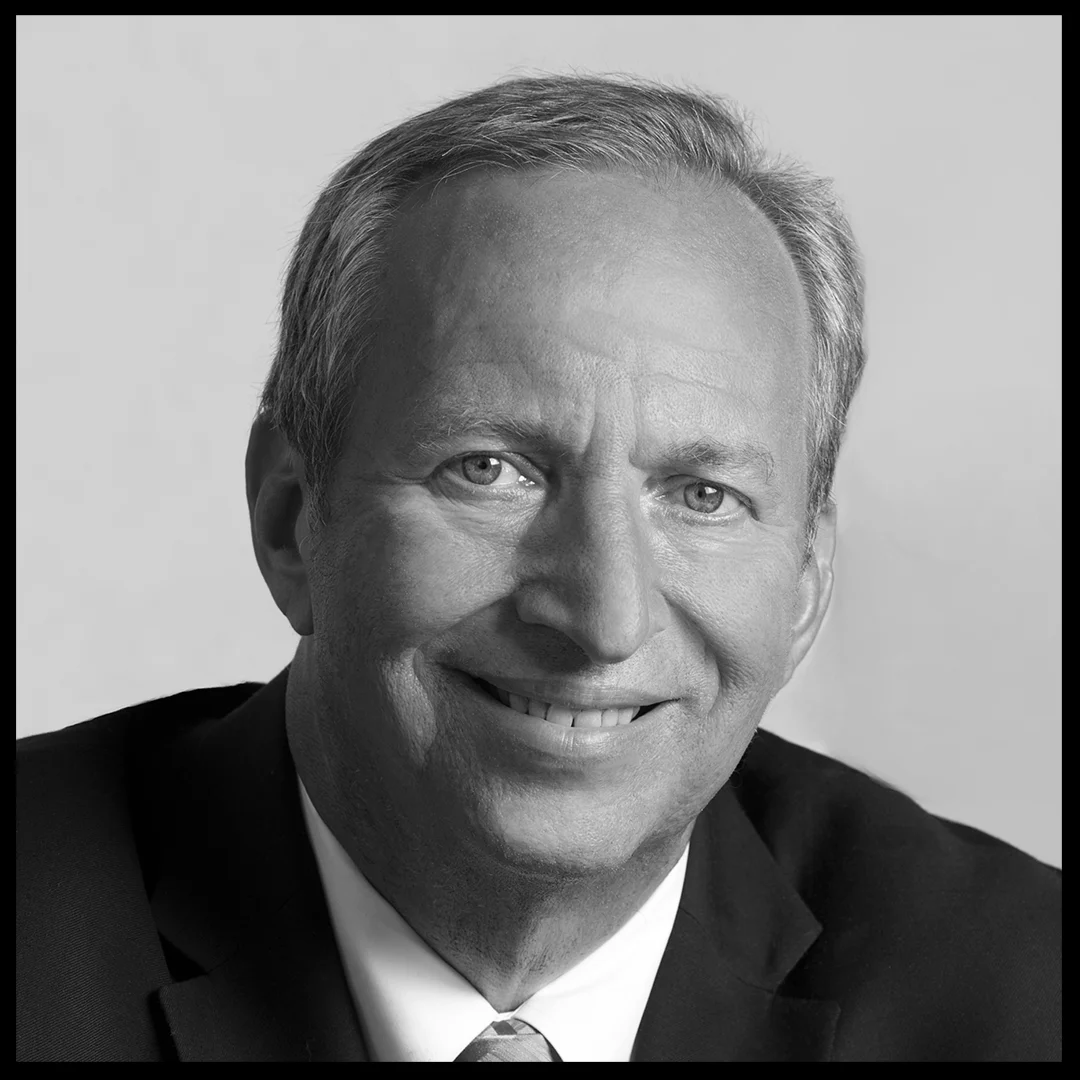
Justin Higgins:  "Hi Larry, what life advice do you have for young adults?"

Larry Summers:  "Hi Justin.  The world that young adults are entering today is a profoundly different from the world I entered when I was that age.  It is a world where opportunities have never been greater for those who know how to teach children to read, or those who know how to distribute financial risk; never greater for those who understand the cell and the pixel; never greater for those who can master, and navigate between, legal codes, faith traditions, computer platforms, political viewpoints.  It is also a world where some are left further and further behind - those who are not educated, those trapped in poverty and violence, those for whom equal opportunity is just a hollow phrase.  Scientific and technological advances are enabling us to comprehend the furthest reaches of the cosmos, the most basic constituents of matter, and the miracle of life.  They offer the prospect of liberating people from drudgery on an unprecedented scale and of eliminating dreaded diseases.  At the same time, today, the actions, and inaction, of human beings imperil not only life on the planet, but the very life of the planet.  Globalization is making the world smaller, faster and richer.  One-third of human beings now live in places where the standards of living may increase 30 fold in a single human lifespan - a transformation that dwarfs what we call the Industrial Revolution.  Still, we are reminded far too frequently that a smaller, faster world is not necessarily a safer world.  Our world is bursting with knowledge - but desperately in need of wisdom.  Now, when sound bites are getting shorter, when tweets and instant messages crowd out essays, and when individual lives grow more frenzied, young adults capable of deep reflection are what our world needs."

. . .

Former Treasury Secretary Lawrence H. Summers is one of America’s leading economists. In addition to serving as 71st Secretary of the Treasury in the Clinton Administration, Dr. Summers served as Director of the White House National Economic Council in the Obama Administration, as President of Harvard University, and as the Chief Economist of the World Bank.

Dr. Summers’ tenure at the U.S. Treasury coincided with the longest period of sustained economic growth in U.S. history. He is the only Treasury Secretary in the last half century to have left office with the national budget in surplus. Dr. Summers has played a key role in addressing every major financial crisis for the last two decades.

During the 1990s, he was a leader in crafting the U.S. response to international financial crises arising in Mexico, Brazil, Russia, Japan, and Asian emerging markets. As one of President Obama’s chief economic advisors, Dr. Summers’ thinking helped shape the U.S. response to the 2008 financial crisis, to the failure of the automobile industry, and to the pressures on the European monetary system. Upon Summers’ departure from the White House, President Obama said, “I will always be grateful that at a time of great peril for our country, a man of Larry’s brilliance, experience and judgment was willing to answer the call and lead our economic team.” The Economist recognized his influence when it defined the “Summers Doctrine,” an approach to economic policy during financial crises that fuses a microeconomic “laissez faire” mentality with macroeconomic activism. “Markets should allocate capital, labour and ideas without interference, but sometimes markets go haywire, and must be counteracted forcefully by government.”

Summers’ five years as President of Harvard represented a time of major innovation for the University. He focused on equality of opportunity and removing all financial obligation from students with family incomes below $60,000 a year. He launched a major effort to make Boston, and Cambridge in particular, the global leader in life sciences research, with the formation of major programs for stem cell research and genomics. Perhaps most importantly, he led efforts to renew Harvard College with dramatic increases in study abroad programs, faculty-student contact, and collaboration across the University during his tenure.

Currently, Dr. Summers is the President Emeritus and the Charles W. Eliot University Professor at Harvard University, where he became a full professor at age 28, one of the youngest in Harvard’s recent history. He directs the University’s Mossavar-Rahmani Center for Business and Government. Summers was the first social scientist to receive the National Science Foundation’s Alan Waterman Award for scientific achievement and, in 1993, he was awarded the John Bates Clark Medal, given to the most outstanding economist under 40 in the United States. He was elected to the National Academy of Sciences in 2002. He has published more than 150 papers in scholarly journals.

Summers is an advisor to businesses and investors. He serves on the board of two cutting edge financial services startups—Square and Lending Club—and also serves on the board of Premise. He chairs the boards of Citizen Schools and the Center for Global Development.  He serves on the board of Teach for America and ONE. He is an advisor to The Hamilton Project, The Hutchins Center on Fiscal & Monetary Policy and the Peterson Institute for International Economics. He is a distinguished senior fellow at the Center for American Progress and recently co-chaired the Commission on Inclusive Prosperity. He also recently chaired the Commission on Global Health, lauded by the UN Secretary General who noted that it “will bring more than health – it will bring equity, and contribute to a life of dignity for all.”

President Bill Clinton said that Larry Summers “has the rare ability to see the world that is taking shape and the skill to help to bring it into being.” He has been recognized as one of the world’s most influential thinkers by Time, Foreign Policy, Prospect and The Economist magazines among many others. In his speeches, regular newspaper columns in The Financial Times and public commentary, he continues to move forward the debate on national and global economic policy.

3 Likes
tags / Larry Summers, Lawrence Summers, Treasury Secretary, Harvard University, Professor

Interview number eight with Robert Herjavec.

June 23, 2016  /  Justin Higgins

Photo:  Courtesy Robert Herjavec

Photo:  Courtesy Robert Herjavec

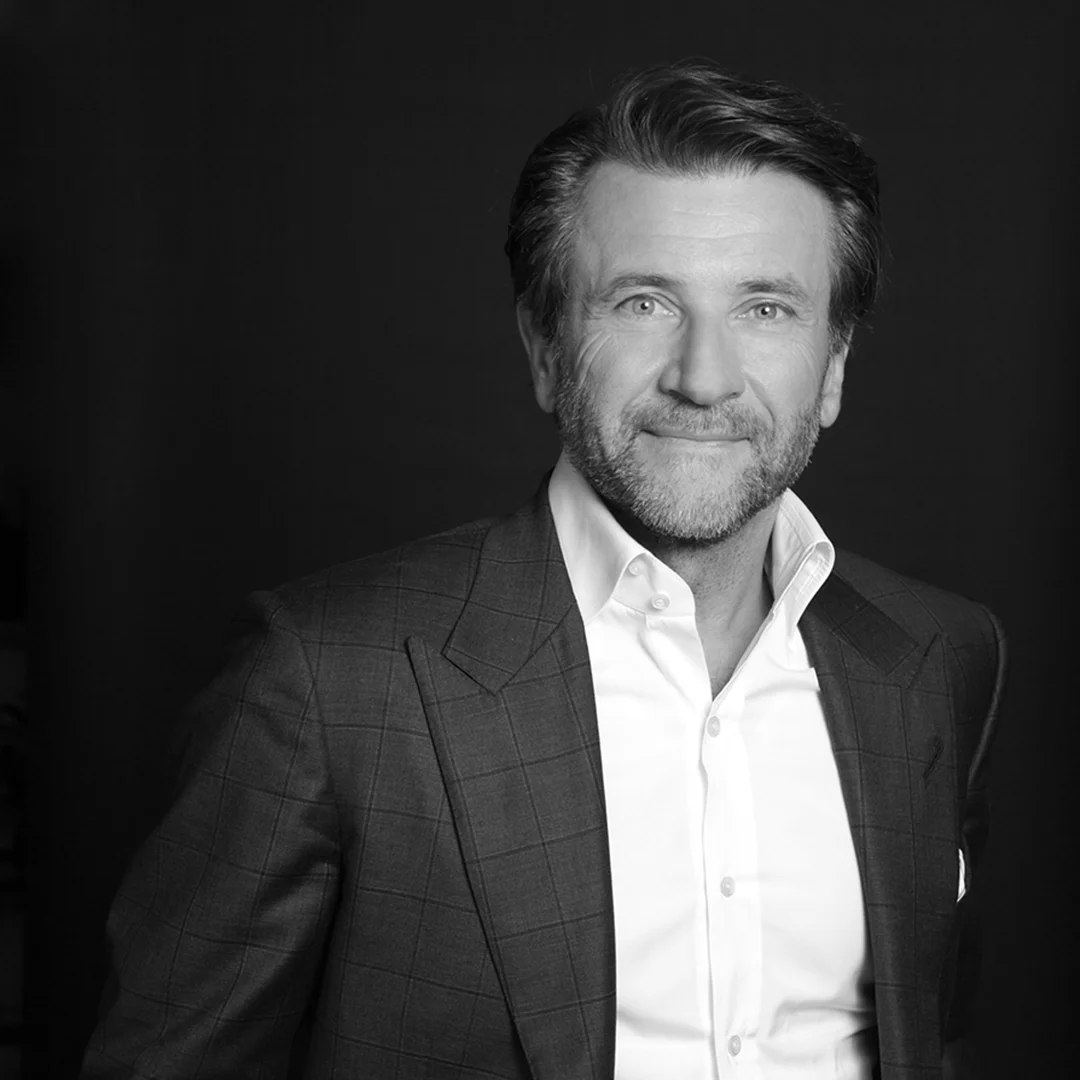
Justin Higgins:  "Hi Robert, what life advice do you have for young adults?"

Robert Herjavec:  "Hi Justin.  Young adults - I don't even understand them half the time (I WILL figure out Snapchat one day!!) - but if I have to give them life advice ... 

First, don't be afraid to make mistakes.  Make some and then make even more!  I've made every mistake in the book and with each one, I've learned something new.  If you fail at something, stick with it because those kinds of lessons are truly invaluable.

Second, and perhaps the most important, be motivated without being entitled.  Remember, the world owes you nothing but opportunity.  Success won't just happen to you, you have to go out and create it for yourself.  You have all of the resources you could possibly need at your finger tips.  It won't come easy, and you'll make mistakes along the way, but you have to find a way to be resilient.

Look, I get it, it's hard and there is a lot of competition out there - lots of people trying to be more successful than you - but with a clear head and laser focus, you'll make your own path."

. . .

Robert Herjavec is one of North America’s most recognizable business leaders. Born in Eastern Europe, he arrived to North America on a boat with his parents after escaping Communism in the former Yugoslavia. From delivering newspapers, and waiting tables, to launching a computer company from his basement, his drive to achieve has led him to the fulfillment of a better life for himself and his family.

 A dynamic entrepreneur, Robert has built and sold several IT companies to major players such as AT&T. In 2003 Robert founded Herjavec Group, and it quickly became one of North America’s fastest growing technology companies. Today, Herjavec Group is recognized as a global leader in information security specializing in managed security services, compliance, incident response and remediation efforts for enterprise level organizations.

His inspiring books, Driven and The Will to Win, were simultaneously Top 10 Bestsellers that earned him the title of “Best Selling Author”. Robert has released his third book, You Don’t Have to Be a Shark: Creating Your Own Success published by St. Martin’s Press on May 17, 2016. Robert’s motivational business advice has received millions of impressions through TV, print, radio and digital media. He shares his expertise with other entrepreneurs each week as a leading Shark on ABC’s Emmy Award-winning hit Shark Tank. Robert recently placed 6th with partner Kym Johnson, competing for the mirror ball trophy on the popular show, Dancing with the Stars.

For the past several years, Robert has competed as Ferrari #007 for Herjavec Group Racing in the Ferrari Challenge North America Series, achieving multiple podiums and winning Rookie of The Year in 2011. To Robert, running a business is a lot like one of his greatest passions, racing cars. He believes, “You have to stay laser-focused when driving a car over 200 miles an hour, and the same approach is required when growing a business in today’s world of rapidly changing technology.”

3 Likes
tags / Robert Herjavec, Herjavec Group, Shark Tank, Entrepreneur

Interview number seven with Arianna Huffington.

May 27, 2016  /  Justin Higgins

Photo:  Courtesy Arianna Huffington/Credit Peter Yang

Photo:  Courtesy Arianna Huffington/Credit Peter Yang

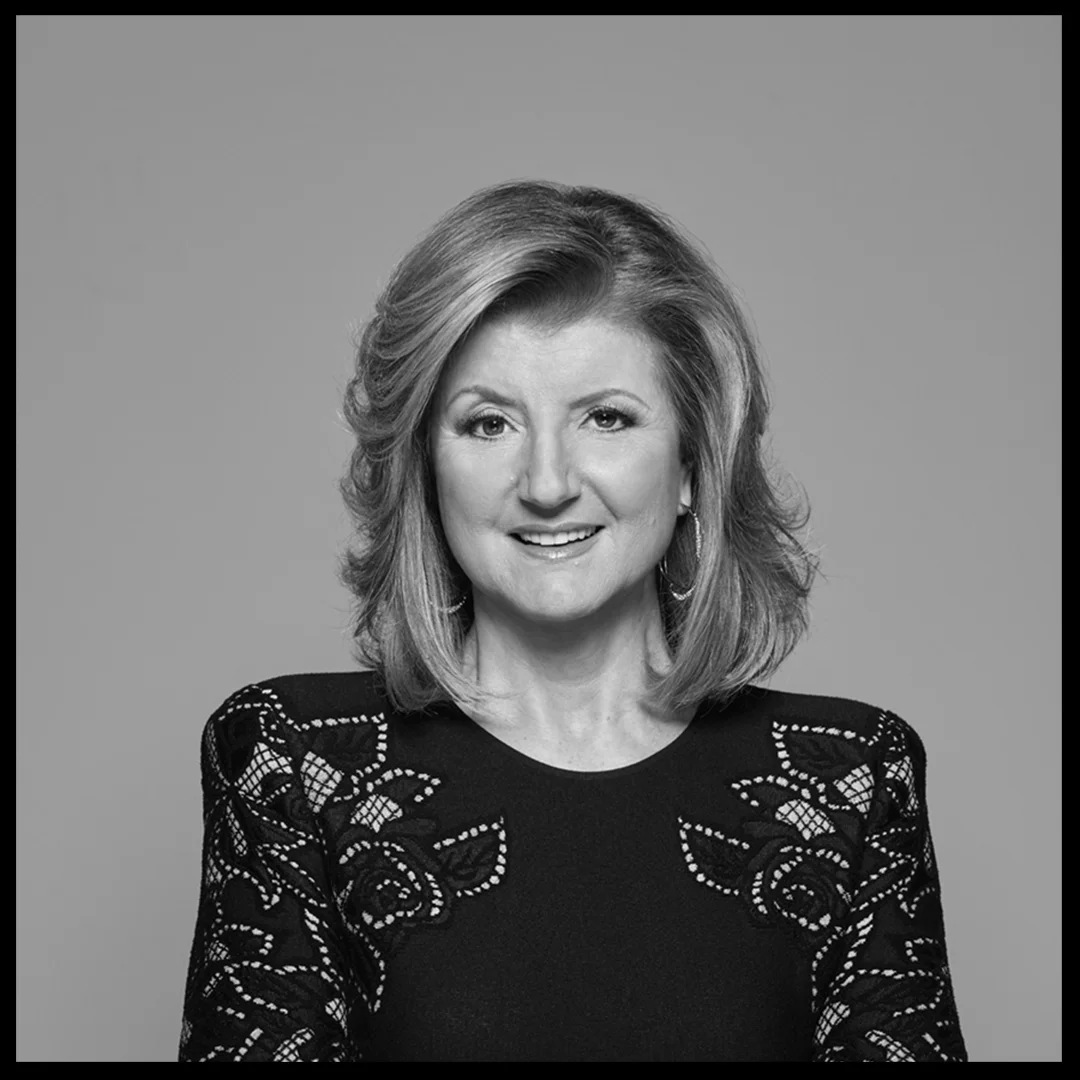
Justin Higgins:  "Hi Arianna, what life advice do you have for young adults?"

Arianna Huffington:  "Hi Justin.  For far too long, we've been operating under a collective delusion that burnout is the necessary price we must pay for accomplishment and success.  As my recent book The Sleep Revolution documents, recent scientific findings make it clear that this couldn't be less true.  Not only is there no tradeoff between living a well-rounded life and high performance, performance is actually improved when our lives include time for renewal.

So my advice to young adults is this:  shake yourselves out of this delusion by making sleep a priority. I'm often asked what advice I would give to my younger self if I had the chance.  My answer?  I wish I could go back and tell myself:  "Arianna, your performance will actually improve if you can commit to not only working hard, but also unplugging, recharging and renewing yourself."  That would have saved me a lot of unnecessary stress, burnout and exhaustion."

. . .

Arianna Huffington is the founder of The Huffington Post, the founder and CEO of Thrive Global, and the author of 15 books, including, most recently, Thrive and The Sleep Revolution.

3 Likes
tags / Arianna Huffington, The Huffington Post, Thrive Global, Media, News, The Sleep Revolution

Interview number six with Kelly AuCoin.

May 08, 2016  /  Justin Higgins

Photo:  Courtesy Kelly AuCoin

Photo:  Courtesy Kelly AuCoin

Justin Higgins:  "Hi Kelly, could you tell me a little bit about your background, from the early days up through your recent work on Showtime’s ‘Billions’, Netflix’s ‘House of Cards’ and FX’s ‘The Americans’?"

Kelly AuCoin:  "Hi Justin, there were various elements of performance everywhere while I was growing up.  My Mom was a singer and my Grandpa played the mandolin.  My dad Les was in politics and served as a Member of the U.S. House of Representatives from Oregon.

When I was a kid, my sister and I were always involved in whatever chorus they had at the various schools we attended.  For whatever reason, all the plays the kids could do were cast out of those groups.  I was one of only a few guys who sang, so I was always guaranteed a role.  If only it still worked that way! 

The first big role I got was Old King Cole in ‘The Trial of Mother Goose’.  I was leading the denizens of fairy tale land in a lawsuit against Mother Goose for defamation of character.  The play was written by the chorus leader.  I remember the first time I made the audience laugh.  I completely didn’t expect it.  I think I did some ad lib or made some facial expression that the audience liked.  At that moment I realized that acting was pretty cool and ever since then I have been hooked on performing.  After that, everywhere I went to grade school and high school I would audition for and perform in plays.

After high school, I attended Oberlin College.  I had a great college experience.  I was a history major and also took philosophy classes, English classes, and any experimental courses I could take.  Oberlin College was a small enough school where you could take all the acting classes you wanted and perform in any play that you were cast for.  You didn’t have to be an acting major. 

Following college, I wanted to be a professional actor.  I decided to make my home base in Washington, D.C. and then I drove around the country in my Volkswagen Bus handing out resumes to different theatres.  Eventually, I ran out of money in Portland, Oregon, which luckily was my home town.  Instead of asking my parents for gas money to get me and my Volkswagen back to Washington, D.C., I got a job working in the recycling end of a steel mill.  I worked there for a month over the summer making the cash I needed to drive back home.  During that same month, I found some local audition notices for some plays in Portland and got a gig.  The play was going to start in December.  Once I had enough money, I drove back to Washington, D.C. and then 3 months later I drove back to Portland to do my first professional show.

From there, I was cast in another couple of plays in Portland and as a result of the connections I made working on those first productions, I got an audition for, and ended up being asked to join the Oregon Shakespeare Festival for two seasons.

So that initial exploratory trip around the country ended up being huge for me.  I met one person, who introduced me to other people, who then introduced me to even more people.  I worked hard, was easy to work with, and made good enough impressions at each stop, so that people could feel confident in recommending me to others.  Luckily, I was able to take advantage of those opportunities.

After spending two seasons at the Oregon Shakespeare Festival, my girlfriend at the time, Carolyn, who is now my amazing Wife, had just graduated from school and had moved back to her hometown of Los Angeles.  I decided to move there to be with her.  Moving to Los Angeles was a smart move personally, but professionally, I landed exactly one gig during the year and a half I lived there.  My now Wife was a dancer and a physical therapist at the time and she decided to commit more of her energies to dance.  She made the decision to move to New York City because if you are a modern dancer that was really the only place to be.  Nothing was happening for me professionally in Los Angeles, so I figured if I was going to be a poor starving actor, slash waiter, slash caterer, I might as well do it somewhere where the woman I love happened to be. 

So we started in New York City and immediately it was better for me.  We didn’t expect to make a ton of money.  We just knew what our nut had to be and we knew that we needed experience.  We both started getting some gigs.  Initially, I did a lot of theatre that didn’t really pay, but it was great learning experience.  I did have survival jobs such as working as a caterer and also there was this amazingly weird and wonderful spy job that I did for a long time down in Chinatown.  We were officially called ‘spotters’ and worked for a company that was hired by high end retailers such as Coach, Louis Vuitton, Oakley and Rolex to identify businesses selling potentially counterfeit goods.  The company loved hiring actors who felt calm under pressure to do the job.  The nice thing about the job is that I was working with other actors who were also trying to make it in show business and everyone shared information about, among other things, where auditions were, or what various agents were like to work with, or what the good headshot places were.  The information was very valuable for me out of the gate in New York City.

Struggle is inherent to this business and it took me a long time to get to a place where I was successfully working with any regularity as an actor.  But, it helped that I never needed to be a star.  My goal was simply to continue working on my art.  I had my moments of doubt and worry along the way, but I never despaired I don’t think, and that was primarily because of the growing network of generous people that my wife and I were amassing, my wife’s unwavering support and my parent’s love for me.  My friends, my Wife and my parents would always ask me how things were going.  I would often say some variation of, “It went well, but I didn’t get it.”  For some reason, I was always able to believe that it went well when I said it.  With every experience, with every rejection, I felt like I was laying the groundwork for a successful career as an actor.  For aspiring actors, you need to understand that, if you are lucky, in the first year or first few years out of the gate you are going to be rejected 90% of the time, maybe even 100% of the time.  Worse, you are going to know a handful of people for whom that is not the case and who will immediately be snatched up and realize quick success and that is going to feel depressing, but they are outliers.  Through it all, you need to allow your failures to empower you and you have to have the willingness and maturity to understand that the rejections are all groundwork for your future successes.

About fifteen years ago, I finally started breaking through, mainly with theatre pieces, with the occasional Guest Star spot on ‘Law and Order’ and other TV shows.  Around this time, I took a step back and realized that I had been making my living doing only acting for the prior two years and that was huge for me.

Things just kept growing incrementally for me.  Each theatre gig that went well seemed to lead to a slightly bigger one next time and a slightly bigger one the next time and so on.  There were very few giant leaps along the way except my first Broadway gig in ‘Julius Caesar’ where I performed opposite Denzel Washington.  That was definitely a huge jump for my career, but notably it came out of a series of seven or eight quality auditions for other things with the same casting director before that director was finally able to push me through to my role in ‘Julius Caesar’. 

After ‘Julius Caesar’, I earned my first recurring role on an NBC show called ‘Waterfront’, starring Joe Pantoliano.  The series shot five episodes and I shot three out of those five.  Unfortunately, the show was cancelled before it ever aired.  Part of me was afraid that 'Waterfront' had been my one chance to push my career to the next level, and when it got cancelled, that really sucked.  But after the cancellation I was still getting interesting roles in plays, and periodically booking guest star roles on TV, so I realized that I was ok.  It was just all part of my slow growth.  But it was another eight years before I got another recurring role.

But then things started to happen for me again in a big way.  Even though I have been making my living just acting for the past fifteen years, the past three or four years I started tapping into something.  Maybe I was doing the same thing and people just started to want to watch me do that.  I got the recurring role of Pastor Tim on FX’s hit show ‘The Americans’.  Then a month or so after that, I auditioned for the third or fourth time for Netflix’s hit show ‘House of Cards’ and I got a recurring role as Gary Stamper.  For that role, I remember going in to audition for the role and the casting director, who I had just auditioned with for something else a few weeks prior, said that, “This is the one.”  This was an example of somebody who has you in mind because they enjoy working with you and they like your work and as a result they actively try to find the right thing for you to prove to the producers that you should be a part of the show. The next role that happened for me soon thereafter was the pilot for Showtime’s hit show ‘Billions’.  That was a situation where a casting director that had brought me in myriad times over the years, dozens of times it felt like, and who always gave me a lot of great feedback, but never a role, thought of me for the ‘Billions’.  This is another example of the importance of forming and cultivating good relationships with those you meet along the way.”

JH:  “What drew you to your character ‘Dollar’ Bill Stearn in ‘Billions?  Will he be back in season two?”

KA:  “You will definitely see ‘Dollar’ Bill back for season two.  It’s interesting.  I initially auditioned for a different character, another one of the traders at AXE capital.  I wasn't what the producers wanted for that part, but I must've done well enough in the audition because they asked me to come back in for the role of ‘Dollar’ Bill.  Initially I actually passed on it because it was a tiny role, only a couple of lines.  I knew the show was going to be great but I just didn't think there would be anything for me to do.  But then over the weekend I thought about the character a little more.  The fact that his nickname was ‘Dollar’ and that he was described in the breakdown as ‘the cheapest man in America’ was undeniably intriguing.  The writers had taken the time to create someone pretty specific.  And, to me, anyway, unusual - a cheap hedge funder. That could be fun to play, and it also indicated that the writers found this guy interesting, and might therefore come up with some cool stuff for him down the line.  It just felt like there was growth potential there.  So I went in for the audition and ultimately booked the part.  The pilot ultimately went very well and the show got picked up.

The first season of the show was a great success.  The set for the show is fantastic, the characters are fantastic, I love all the other traders and portfolio managers I work with and all the leads.  ‘Dollar’ Bill grew into something really fun.  The fake fight scene he was in with Damian Lewis’ character Bobby Axelrod was a highlight.  When I read that scene on the page I actually started jumping up and down and ran into the next room where my Wife was working and said, “Look at this!”  That was written by Willie Reale, one of the writers on the series, and he wrote the shit out of that scene.”

JH:  “Have you completed or are you working on any new projects that you can tell us about?”

KA:  “I appear in HBO’s upcoming Bernie Madoff movie ‘The Wizard of Lies’, starring Robert Di Niro.  Also, I appear in ‘Drunk Parents’ which is going to be a really funny movie starring Alec Baldwin and Salma Hayek.  Additionally, I just shot the last three episodes of this season, including the finale, of NBC’s “Blacklist” and just wrapped the season four episodes in March for ‘The Americans’, which are about half way through showing on FX.  Coming up, I am going off to do a play for about three weeks, back mid-June, and then I start shooting season two of ‘Billions’.”

JH:  “What life advice do you have for young adults?”

KA:  “The first piece of advice I would give to young adults might run contrary to that given by others in the industry.  I did not go to graduate school for acting and I didn’t even major in theater as an undergraduate.  Some people warned me that this might look to others like I lacked focus, but screw it, I was interested in so many things.  There are obviously a lot of brilliant actors who do go to grad school, and I am definitely not painting and either/or scenario.  It's just that people forget that there are many paths to a successful career in show business.  When people tell you that the only route is through graduate training, they’re wrong.  That is a perfectly viable route, yes, but I would say that there are tons of actors who are brilliant and successful actors because they are fascinating people who are interested in the world and have pursued their myriad interests.  I want to be clear that I'm not saying that studying the craft of acting isn’t important.  Definitely not, it absolutely is.  But craft without life experience, it's pretty hollow to me.  Being myopic either way I think limits you.

Second, the best training is doing.  Act as much as you can.  If you develop a niche, something you do particularly well, sort of like a go-to move, that’s great, it can help you get cast.  But always work with people who challenge you, too.  Do things that scare you.  If you enter a space perfectly willing to make an ass of yourself, then you are in the best possible place to start rehearsing something. 

Finally, be good to work with.  I don’t mean just following blindly, but say “yes” a lot.  And if you don’t agree say “yes, but…”.  In other words, try it.  And I mean really try it.  The only way you can legitimately disagree is if you’ve given an idea a fair shot.  Then you can discuss changes because everyone is feeling heard and respected.  I like to work with people, with directors and other actors, who are willing to hash something out and with whom I feel comfortable sounding stupid with or asking stupid questions to.  Not having too much a sense of ego is of paramount importance.  Don’t worry about being cool.  Fuck cool.  Cool is the death of good acting.”

. . .

Mr. AuCoin is an award-winning American actor best known for playing:  ‘Dollar’ Bill Stearn on Showtime’s hit series ‘Billions’; Gary Stamper on Netflix’s hit series ‘House of Cards’; and, Pastor Tim on FX’s hit series ‘The Americans’.  Later in 2016, Mr. AuCoin will be seen in HBO’s upcoming Bernie Madoff movie, ‘The Wizard of Lies’, starring Robert DeNiro, and also in the film ‘Drunk Parents’, starring Alec Baldwin and Salma Hayek.  Also known for his theater work, in 2015 Mr. AuCoin won a ‘Drama Desk Award’ for his Signature Theatre’s ‘The Wayside Motor Inn’.  Mr. AuCoin has starred as Octavius Caesar opposite Denzel Washington in the Broadway revival of ‘Julius Caesar’, and as Jim Warnock in the west coast premiere of JT Rogers’ ‘Blood and Gifts’ at La Jolla Playhouse. Mr. AuCoin has Guest Starred in dozens of television shows, including:  NBC’s ‘The Slap’ and ‘The Blacklist’; CBS’ ‘Madam Secretary’, ‘Person of Interest’, ‘The Good Wife’, ‘Unforgettable’, and ‘Blue Bloods’; FOX’s ‘The Following’ and ‘Gossip Girl’; ABC’s ‘Forever’; and, USA’s ‘White Collar’.

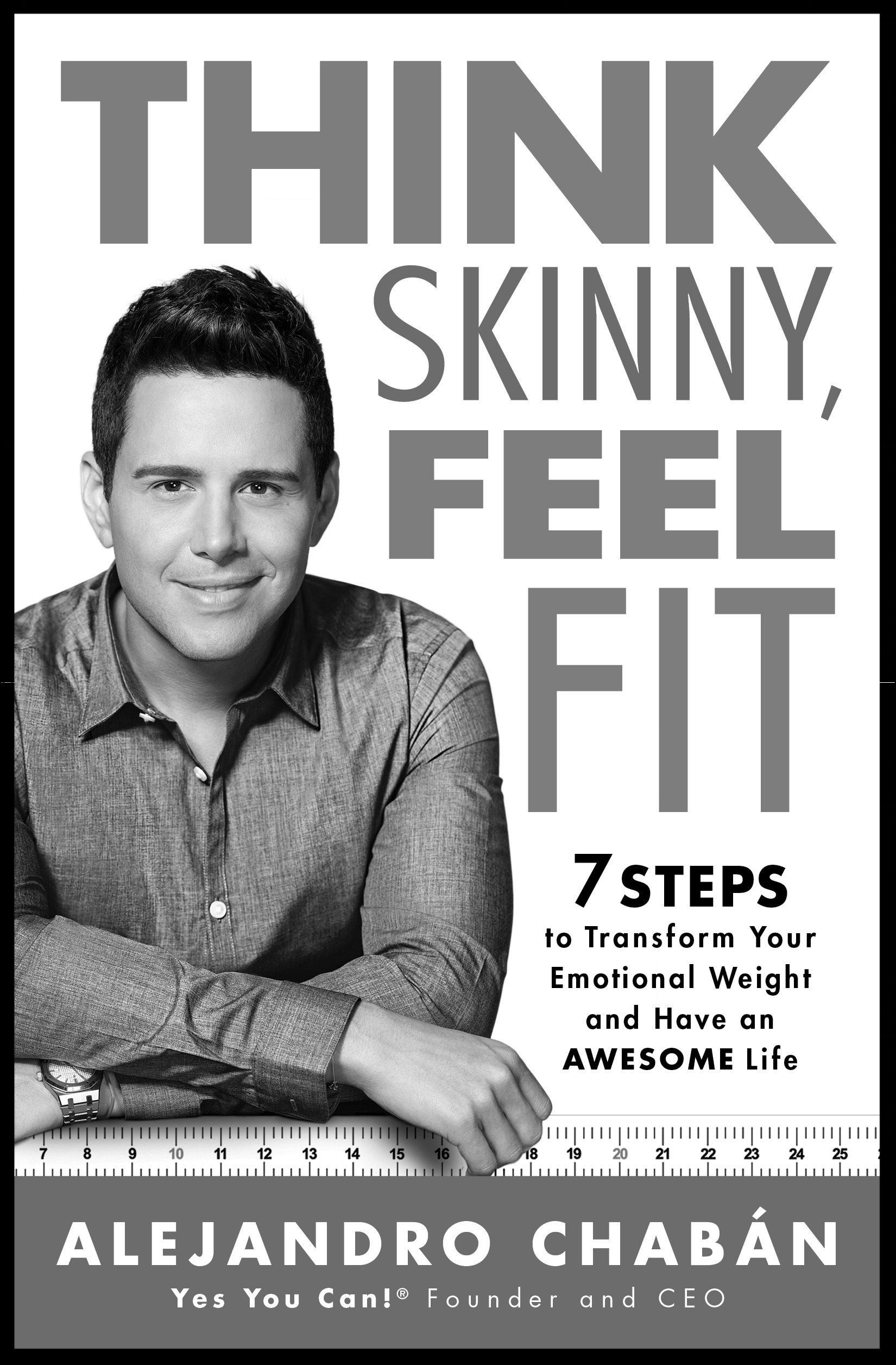
2 Likes
tags / Kelly AuCoin, Billions, Actor, Acting, Stage, Movies, TV, The Americans

Interview number five with Matt Higgins.

May 04, 2016  /  Justin Higgins

Photo:  Courtesy Matt Higgins

Photo:  Courtesy Matt Higgins

Justin Higgins:  "Hi Matt, could you tell me a little bit about your background, from the early days up through the launch of RSE Ventures?"

Matt Higgins:  "Hi Justin, I was born in Flushing, Queens and grew up in really humble beginnings.  I had a great Mom who, as a single mother raising four boys, did everything she could to manage living in poverty.  She started raising us alone when I was nine.  A lot of my identity, and the value I placed on education and self-improvement, came from my mother.  She received her high school GED and thereafter pursued education at night and on the weekends.  She was sick the entire time she was raising us and pursuing her education, so that shaped a lot of my world view as well.  My Mom eventually earned a bachelor’s degree and two master’s degrees.   Ultimately, I ended up taking care of her and eventually she ended up in a wheelchair.

I learned a lot when I was young and it was sort of the beginning of me architecting my life.  I began to live an intentional life.  I realized that we are confronted with little choices and big choices everyday and how our life turns out is primarily in our own hands.  You can't control everything, but you can control a lot along the way.

One of my early decisions was that poverty was not something that I wanted to define me and live in me.  I knew that there was a way out of poverty and that the way out was through education and work.  I decided that I was going to pursue education and work day and night until I turned my life and my mother's life around.

Modeled after what I saw my mother do, I eventually found a shortcut to accelerate my career, which was to get my GED.  Whereas my mother had to do it because she did not receive an education when she was younger and also wanted it for self-respect, I realized that for me a GED could provide a quick way to get to college.  My thinking was that once I was in college I would be able to obtain a level of job that I would not be able to obtain otherwise.

So, at the age of sixteen, I made a conscious decision to drop out of high school.  I remember a teacher sort of jokingly saying to me on my last day of high school when I had to return my textbooks in front of the entire class, "I will see you at McDonald's."  To which I confidently responded, "If you do, it’s because I will own it!"  That was literally the last thing I ever said before leaving high school. 

Dropping out of high school to get my GED was probably the first very unconventional decision that I had to make that was met with, to put it mildly, skepticism, or more accurately, scorn.  I had a lot of conviction that it just made more sense given my circumstances.  I wouldn't recommend that decision to everybody but, if you have a situation and you desperately want to change it, I believe that you need to look for any path you can find that suits you and your objective.  Given my circumstances, living in abject poverty and having a mother that I needed to take care of, finishing high school just didn't make sense for me.  I tie a lot of my success back to that decision when I first chose to defy convention and follow my own instincts.

After leaving high school, all within a couple weeks, I took my GED and my SATs.  I then started Queens College when I was sixteen and that opened up a whole series of doors.  By virtue of starting college, I was able to get a job with Congressman Gary Ackerman when I was sixteen.  At seventeen, I got a job as a reporter.  Eventually, I started my own column.  From there, it was really just a series of connecting the dots - stepping stones.  One thing always led to another.  I graduated law school and eventually became Mayor [Rudy] Giuliani's press secretary when I was twenty-six.  That was an amazing opportunity for me that ultimately led me to working with the New York Jets.  Now I am the Vice Chairman of the Miami Dolphins and Co-Founder and CEO of RSE Ventures."

JH:  "What is RSE Ventures?"

MH:  "Technically speaking, we are an investment company that plays at the intersection of sports, entertainment and technology, with content at the core.  We invest in companies that in some way are taking content, sometimes live or otherwise, and optimizing it or bringing it to life. We have developed an ecosystem designed to take an idea that has not come to fruition and then create a new form of content, or take an existing form of content, and then optimize it. That ecosystem includes, among many other companies, a sports marketing company, the largest digital media firm in the country, VaynerMedia, and a public relations firm which we own and incubate.  When taken together, when you look down at RSE Ventures from twenty thousand feet, you realize that our portfolio would enable you to optimize pretty much any type of content.

In terms of our behavior, we connect the dots so to speak in the same manner that enabled our Co-Founder Stephen Ross to accomplish all the things he has done in his life.  We are not so rigid and dogmatic that we stay within tightly crafted verticals.  We stay with what we know and we look for opportunities to leverage our existing investments or our partners to bring everyone to the next place.

In terms of our methodology, we look for great entrepreneurs even more so than great ideas. Ideas are cheap as the cliché goes but great entrepreneurs are hard to find.  Our model when we are incubating a new company is to find a great entrepreneur who has what we believe it takes to be successful."

JH:  "I read that RSE Ventures recently invested in The Drone Racing League and its founder is an entrepreneur that you believe has what it takes to be successful.  Could you tell me about that?"

MH:  "I think The Drone Racing League is a perfect case study.

First, in that instance you have a trend on the horizon that we had conviction would become mainstream.  The only reason we were able to see that before others was because of the ecosystem that brings us in contact with ideas on the horizon and our foresight to recognize that it is an idea that has a high probability of matriculating.  

Second, by virtue of our experience, we were able to identify what we ultimately think is a successful entrepreneur.  Nick [Horbaczewski], the founder of The Drone Racing League, has a unique blend of characteristics.  He has a creative side having had experience as a film producer.  He has experience in sports marketing through Tough Mudder, a company he founded.  He holds an MBA from Harvard.  Taken together, these characteristics, combined with his stick-to-itiveness, have created the perfect storm of an opportunity for RSE Ventures and The Drone Racing League.

I also like the investment with The Drone Racing League because it required us to take an unconventional approach.  The safer thing to do would have been to wait for the category to mature and for it to become obvious that drone racing is a thing.  But if you really want to take advantage of opportunities I think you just rely on your own inner voice and then act on it.  Do not worry about any ridicule that you might be subjected to.  You have to believe that in the end you are going to be right.

One of my favorite pieces of writing is ‘Self Reliance’ by [Ralph Waldo] Emerson.  The first couple thousand words are all about feeling the indignity of recognizing your own thoughts espoused by somebody else and then having to take those thoughts from another individual when in fact you had those thoughts but denied your own inner voice.  Obviously I am butchering the wording but, the point is, that when I find an opportunity like The Drone Racing League, and we act on it, those are the investments I enjoy the most."

JH:  "What life advice do you have for young adults?"

MH:  "Three pieces of advice come to mind.

First, the common thread that I look for in successful entrepreneurs and successful people generally is, can they iterate their own problems.  If you can iterate there is almost no problem you can't solve and turn into an opportunity.  That takes a certain mindset, but you don't have to be born with it.  I believe that you can learn the capacity to iterate.  You can learn to take a situation that isn't going perfectly well, use your brain power and resources, and figure out how to iterate to the next level.  Never surrender and never give up no matter what situation you are in.  

Second, I think that there is a tendency sometimes to look past the job you are doing to the job you want and not realize that the path to the job you want is through the job you are doing.  With that said, I think that you really want to make sure that in any job environment that you are in you are making yourself indispensable.  If you make yourself indispensable and excellent at any job, whether you are the office receptionist or in your first year out of business school, somebody is going to notice you in that environment and decide to push you to the next level.  You won't know who is noticing you and you won't know what they are noticing you for.  In fact, they are probably noticing you for things that you didn't imagine they would be, so do not give short shrift to what you think is a seemingly trivial task or menial task because that might be the thing that is valued the most by whoever is in a position to help you.  Eventually, when the opportunity comes when somebody notices you out of the corner of their eye, make sure you are open and receptive to it.  It is essential to have the humility and the wisdom to submit yourself to what other people have to teach you and to take advantage of it.

Lastly, you need to understand that you don't need to have all the answers.  There was a time in my life when I thought all I needed was my own brain power and my own experience to figure everything out.  If you feel like you need to have all the answers in life then you are going to be more resistant to recognizing the magic of somebody else.  You are going to place a higher premium on your own capacity rather than recognizing that being able to spot someone else's greatness is also a skill and facilitating someone else's magic is a great endeavor.  As I have grown up and evolved, I realize that some of the best decisions I have ever made were to realize someone else's greatness and to try to put them in a position to take it even further.  For example, my partnership with Gary [Vaynerchuk], CEO of VaynerMedia, is one of the best decisions I have ever made.  That required me at a moment in time to say to myself, “This person is really special and I admire them and I would like to figure out how I, in some small way, can make a contribution to make them even better.”  I have done that a bunch of times with great entrepreneurs and have found it to not only be personally rewarding but also very professionally rewarding."

. . .

Matt Higgins serves as both the Vice Chairman of the Miami Dolphins and the CEO of RSE Ventures.

In 2012, with co-founder Stephen Ross, he launched RSE Ventures, an international sports, entertainment and technology firm.  As CEO, he has founded several successful companies including Derris & Company and Catalyst Media Group.  He is also one of the founders of the International Champions Cup, a global pre-season soccer tournament that was broadcasted to over 600 million households in 2014.  In addition to building businesses, Higgins actively invests as a partner at Vayner/RSE, an early stage venture fund created in partnership with serial entrepreneur Gary Vaynerchuk.    

Prior to RSE, Higgins worked as the EVP of Business Operations at the New York Jets where he transformed the team's profile through social media and non-traditional brand extensions.  He has also served as COO of the Lower Manhattan Development Corporation where he was responsible for helping lead the rebuilding effort of the World Trade Center site.

Matt is also a board member of Autism Speaks where he leads the MSSNG project, a partnership with Google that aims to demystify autism through genetic sequencing and open science.


6 Likes
tags / Matt Higgins, RSE Ventures, Miami Dolphins, NFL, Football, Entrepreneur

Interview number four with Christopher Burch.

April 26, 2016  /  Justin Higgins

Photo:  Courtesy Christopher Burch

Photo:  Courtesy Christopher Burch

Justin Higgins:  "Hi Christopher, what life advice do you have for young adults?"

Christopher Burch:  "Hi Justin, my advice for young adults is think out of the box.  Never create a company after a company that's already been ... find a new and disruptive twist.  There is no balance in life when you are starting out after college.  You need to work nonstop and always ask questions. Engage in conversations.  Be curious.  And collaborative.  When you are most fearful, move ahead, and when you feel you have it all figured out, be very cautious."

. . .

The company’s investment philosophy is an expression of Christopher Burch’s entrepreneurial values and his vision for new market opportunities, using a creative skill set along with sound financial practices to create, incubate, support, and scale disruptive brands and businesses.

In his 30-year career as an investor and entrepreneur, Christopher Burch has participated in the rise of more than 50 companies. By combining an intuitive understanding of consumer behavior with international and direct sourcing experience, he has a built a long track record of connecting innovation to impact.

Creative Capital represents the evolution of venture capital based on Christophers’ belief that the activity of successful investing also includes creativity.

In the past, we were investors looking for existing opportunities. Today, we are entrepreneurs who invent and attract new ones. We apply more than funding to earn a return. We invest our creativity, passion, and insights to create value.

Burch Creative Capital’s brand portfolio includes the recent introductions of ED by Ellen DeGeneres, Cocoon9, Nihiwatu, Poppin and TRADEMARK to a list of established brands previously embraced by Christopher including the Faena Hotel + Universe, Jawbone, Next Jump, Powermat, Tory Burch and Voss Water.

The company is currently supporting the development of several lifestyle and consumer products brands ranging from retail, apparel and home furnishings to the hospitality, organic foods, and technology industries.

3 Likes
tags / Chris Burch, Burch Creative Capital, Venture Capital, Investor, Tory Burch

Interview number three with Chris Sacca.

April 15, 2016  /  Justin Higgins

Photo:  Courtesy Chris Sacca

Photo:  Courtesy Chris Sacca

Justin Higgins:  "Hi Chris, what life advice do you have for young adults?"

Chris Sacca:  "Hey Justin, my advice for young adults:

The most successful and ambitious people out there know to create value before asking for anything in return.  You want to get my attention?  Start doing some of my work.  Don't try to convince me of your potential with a cover letter.  Show me your potential by getting some shit done.  Don't email asking if you can pitch me.  Send me a URL to something you built or discovered that makes me stop in my tracks.

Two months ago, a 15-year-old in Mississippi overheard me say on Periscope that I wished our firm's web site had a Jobs page.  So, without reaching out to us at all, he just went ahead and built one.  He scoured the sites of all of our portfolio companies cataloging all of the open positions and created a dynamic and beautiful page from scratch.  He said he had a day off from school so he banged it out and posted the link on Twitter.

Well, guess which venture capital firm that gets thousands of resumes a year now has a 15-year-old intern routinely helping us with projects?

Distinguish yourself through your hustle and your initiative.  Everyone who works with me didn't end up here by sheer chance or coincidence.  Rather, it was the result of consistent, material, tireless effort along the way.  Gravity wants you to be average.  Fuck gravity."

. . .

An accomplished venture investor, company advisor, and entrepreneur, Chris manages a portfolio of over eighty consumer web, mobile, and wireless technology start-ups as well as an array of mature enterprises through his holding company, Lowercase Capital. While primarily known for its investments in seed and early stage technology companies like Twitter, Uber, Instagram, and Kickstarter, Lowercase has quietly grown to be one of the larger venture funds in the United States.

Previously, Chris served as Head of Special Initiatives at Google Inc. In that role, among other responsibilities, he founded and headed up Google’s Access division. His most visible projects include Google’s 700MHz and TV white spaces spectrum initiatives, the company’s groundbreaking data center in Oregon, and Google’s free citywide WiFi network in Mountain View, CA. Chris also spearheaded many of Google’s business development and M&A transactions and was on the founding team of the company’s New Business Development organization. In recognition of his accomplishments, Chris was one among the first Google employees ever given the Founders’ Award, the company’s highest honor.

Before joining Google, Chris held a number of executive roles at one of the world’s largest streaming and digital media distribution companies, Speedera Networks (acquired by Akamai Technologies), and was ultimately responsible for their legal and corporate development efforts. Prior to Speedera, Chris was an attorney with the Silicon Valley law firm of Fenwick & West where he handled venture capital, mergers & acquisitions, and licensing transactions for technology clients such as Macromedia, VeriSign, and Kleiner Perkins. In 2008, Chris worked on President Barack Obama’s campaign as a Telecommunications, Media, and Technology advisor, a speaking surrogate, a field office volunteer, and as Co-Chair of Finance and a Trustee of the Presidential Inaugural Committee. In 2012, Chris continued his work as a National Finance Committee member, a host of the President’s own technology roundtable series, and as a Co-Chair of Tech for Obama.

In The Wall Street Journal, Chris was once cited as “possibly the most influential businessman in America” and Vanity Fair recently named Chris to its distinguished “New Establishment” list. Since 2011, Chris has been one of the youngest members of the coveted Forbes “Midas List” recognizing the country’s top technology investors and has been climbing up the list each year, landing at #3 in 2015. Chris is a fixture in the Silicon Valley startup community, in part for the kind of fruitful and fun collaborations with early stage companies for which he was named of the top 10 angel investors in the country by BusinessWeek, and in part for his unforgettable cowboy shirts which earned him a spot on GQ’s ”Worst Dressed List”.

Chris is a Henry Crown Fellow of the Aspen Institute, which annually selects 20 of the world’s most promising leaders and public servants under the age of 45 and he has also served as an Associate Fellow of the Said Business School at Oxford University and as an MIT Enterprise Forum Global Trustee.

Chris regularly appears on television, radio, and in print and has been featured in BusinessWeek, Fortune, Fast Company, and on CNBC, BBC, CNN, FOX, and NPR as an expert in the realms of entrepreneurism, venture capital, and disruptive technologies. In parallel with his frequent keynotes at technology industry events, Chris is perennially hired by many of the world’s largest companies, financial institutions, universities, and governments to speak about innovation, workplace design, and business strategy in a digital era.

Chris graduated cum laude from Georgetown University Law Center where he was a member of The Tax Lawyer law review and was honored as the school’s Philip A. Ryan and Ralph J. Gilbert Memorial Scholar. He also graduated cum laude from the Edmund A. Walsh School of Foreign Service at Georgetown University and was an Edmund Evans Memorial Scholar as well as a Weeks Family Foundation Scholar. During his studies, Chris attended university at each of: the Universidad Católica del Ecuador in Quito, Ecuador, University College Cork, in Cork, Ireland, and the Universidad Complutense in Madrid, Spain. Long before that, beginning in 7th grade, Chris attended the State University of New York at Buffalo for six years of college mathematics classes wearing thick glasses, awkward braces, and knowing the entire time that technology and computers would be passions of his for life.

Always taught by his parents the importance of giving back to those who need our help, Chris dedicates much of his time to helping charity:water and, if you spend any time with him, he will likely rope you into doing your part as well. When not on the road for his companies, or huddled up in the cramped apartments and coffee shops where his entrepreneurs often write their code, Chris lives with his family in both Truckee and Los Angeles California, is an avid alpine and nordic skier of the Sierra, surfer and kitesurfer of the California coast, an Ironman triathlete, and he has bicycled coast-to-coast across the United States of America.


8 Likes
tags / Chris Sacca, Lowercase Capital, Venture Capital, Investor, Shark Tank
Newer  /  Older